









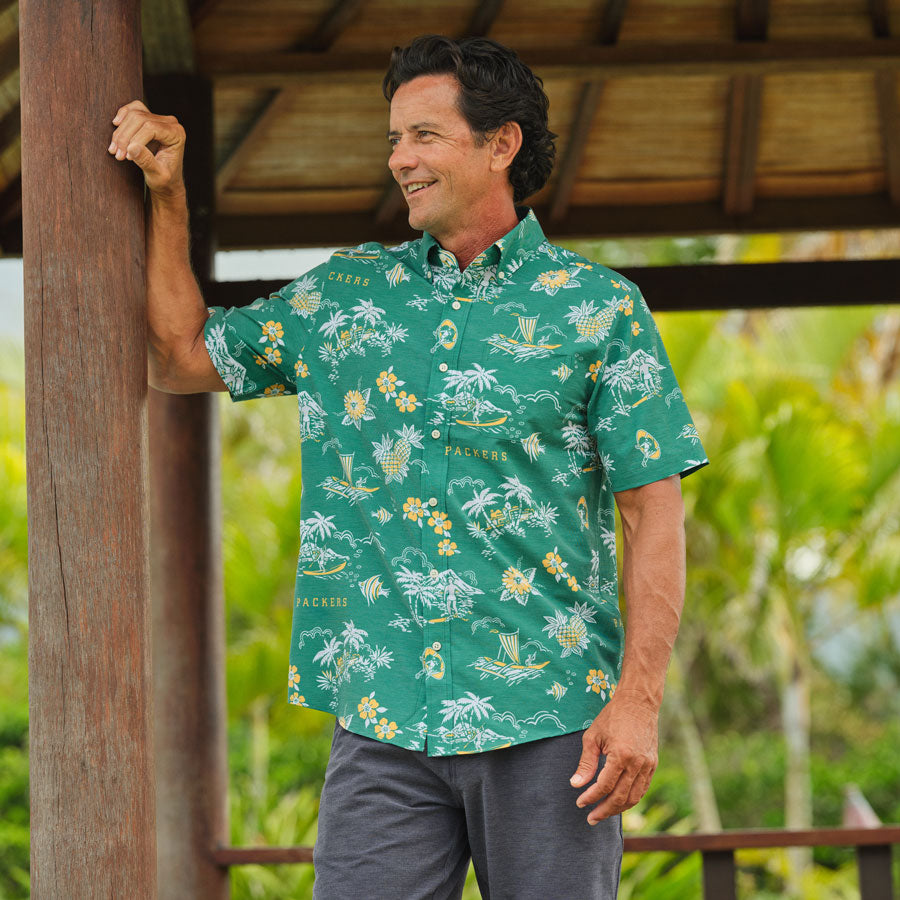


In celebration of the launch of Reyn Spooner’s collection honoring the 60th anniversary of The Endless Summer, we caught up with acclaimed filmmaker Dana Brown to reflect on the enduring legacy of the iconic film and the spirit of adventure that continues to inspire generations.
The son of legendary director Bruce Brown, Dana grew up immersed in the world of surf filmmaking, travel, and storytelling. Following in his father’s footsteps while carving out a voice distinctly his own, Dana has become one of the most respected filmmakers in action sports cinema. His credits include The Endless Summer 2, the acclaimed surf documentary Step Into Liquid, and Dust to Glory, among other celebrated features.
Known for blending humor, humanity, and breathtaking cinematography, Dana’s work carries forward the same sense of curiosity and joy that made The Endless Summer a cultural touchstone. Through his films, he has continued to explore the universal themes of adventure, connection, and chasing what excites you — values that remain just as relevant today as they were six decades ago.

When did you first start making films, and what pulled you into it?
I started when I was about 10 years old with a Super 8 camera I got for Christmas. Growing up with what my dad did, filmmaking just seemed normal — kind of like being part of a family business. I didn’t really think of it as anything unusual at the time.
What is it about filmmaking that’s kept you in it all these years?
I get paid well, I love doing it, and the joy — the stoke — I get back from audiences and even total strangers is priceless. That connection never really gets old.
As a kid, what moments behind the scenes — travel, editing, or even just listening to narration — left the biggest impression on how you think about building a story today?
Watching my dad narrate The Endless Summer live when I was four or five years old left a huge impression on me. Seeing the spell those audiences fell under was indelible. I think, deep down, I wanted to make people feel that same way.
Your dad’s films feel simple, but they’re incredibly intentional. Did that philosophy — keeping things accessible and human — shape how you approach directing, or did you ever feel the urge to push against it?
I always admired my dad’s work. It just felt natural to me. I’ve always wanted to use cutting-edge advancements in cameras, editing, sound — all of that — but I also appreciate the magic of making something incredibly complicated and time-consuming feel effortless and simple. That’s harder than people realize.

What’s something about your father, Bruce Brown, that people don’t see in his films — but that had the biggest impact on who you are today?
Honestly, my dad as a person was even funnier, more interesting, and more impressive than his films. The films almost pale in comparison to who he was. That probably sounds corny, but it’s true.
Growing up around that world, what did that community of surfers and filmmakers feel like day to day?
At the time, it all just seemed normal to me. My friends’ parents actually seemed more exotic. I think most kids probably feel that way about their own families. It wasn’t until I got older that I really started to understand and appreciate how unique it all was.
Are there any stories from that time that really capture what that era was like?
There are so many classic stories that it’s hard to pick just one. That era kind of defies being put into a box or summed up with a single label. It was bigger and more alive than that.
As The Endless Summer hits its 60th anniversary, what do you think has allowed it to resonate across so many generations?
I think it lasts because it connects with people on a level beyond explanation. It’s about possibility — about adventure, joy, and what can happen if you’re willing to go for it. And honestly, it’s fun. Fun is timeless.
Do you remember the first time you watched it and understood how special it was — not just as your dad’s film, but as something bigger?
I first saw it when I was four years old. As I got older, I started to understand the impact it had. And honestly, I’m still realizing it.
Why do you think The Endless Summer still connects with people who may not even surf?
Because it’s not really about surfing. It’s about following your dream. Everybody has a dream they want to chase, and I think people recognize that in the film whether they surf or not.
If someone is watching it for the first time today, what do you hope they take away from it?
I hope they walk away feeling like it was 90 minutes well spent — and that they’re stoked.



 Your Privacy Choices
